
TMD often develops from a combination of factors rather than a single cause. The temporomandibular joint (TMJ) is located just in front of each ear and connects your lower jawbone to your skull. You have one joint on each side of your head, and both work together to help you open and close your mouth, chew, speak, and yawn. Each joint contains a small disc of cartilage that cushions the joint and helps the jaw move smoothly. Unlike a simple hinge, the TMJ combines rotating and gliding movements that require coordination between the joint, surrounding muscles, and supporting tissues. Temporomandibular disorders (TMD) can develop when something interferes with the normal function of the joint or the muscles that control jaw movement. Joint irritation, changes in the position or movement of the disc, and tight or overworked muscles can contribute to pain, stiffness, clicking, popping, or difficulty opening your mouth. Several factors can place additional strain on the jaw, including clenching your teeth, grinding your teeth at night, poor head and neck posture, and stress. Over time, these habits can increase muscle tension and contribute to discomfort. Prolonged dental procedures can also trigger symptoms by requiring you to keep your mouth open for an extended period, particularly near its maximum opening, which can strain the jaw joints and surrounding tissues.
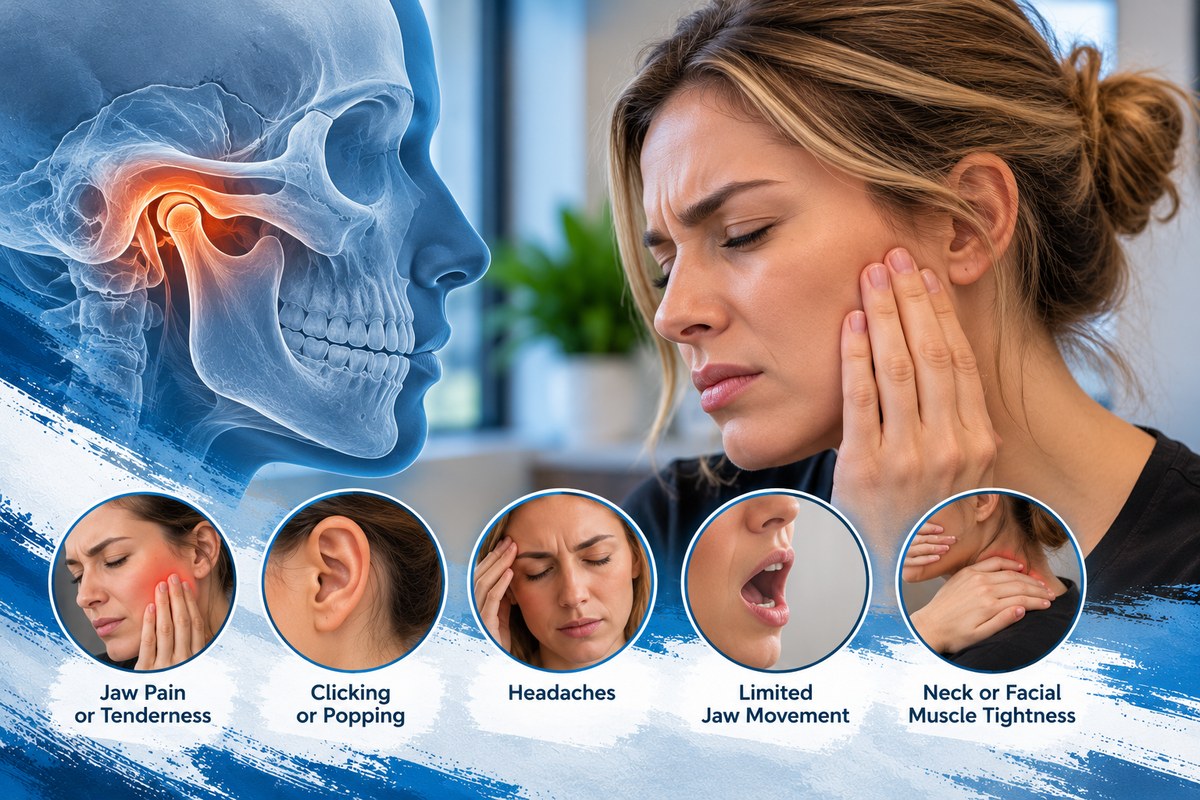
Temporomandibular disorders (TMD) affect the jaw joint and the muscles responsible for chewing and jaw movement. Although TMD can affect people of all ages, it is most common in adults between the ages of 20 and 40. Women tend to experience TMD more frequently than men. People who experience high levels of stress or frequently clench their jaw or grind their teeth may also be more likely to develop symptoms. TMD symptoms can range from mild discomfort to pain that interferes with everyday activities like eating, talking, and yawning. Common symptoms include jaw or facial pain, soreness around the ears, and clicking or popping sounds when opening or closing the mouth. Some people experience jaw locking or difficulty opening their mouth fully. Headaches and neck pain can also occur, along with jaw fatigue or soreness after chewing or talking. Others may notice that their bite feels different or that their teeth no longer fit together the way they normally do.

Physical therapy can play an important role in managing temporomandibular disorders (TMD) and helping you return to comfortable, normal jaw function. At Rally to Rise Physical Therapy, our goal is to reduce pain, improve jaw mobility, and address muscle tension, movement limitations, and postural habits that may be contributing to your symptoms. Treatment is tailored to your individual needs and may include hands-on techniques to relax tight jaw muscles and improve joint mobility, along with targeted stretches and exercises to improve the strength, flexibility, and coordination of the jaw and neck muscles. Your physical therapist may also help you improve your posture to reduce unnecessary strain on the jaw, particularly if you spend a lot of time sitting or holding your head forward. Education on everyday habits, such as avoiding teeth clenching, and reducing excess strain on the jaw, can also be an important part of your recovery. Because stress can contribute to jaw tension, your treatment may include relaxation strategies to help you manage muscle tension and develop healthier habits. With an individualized treatment plan, physical therapy can help reduce discomfort, improve jaw function, and make everyday activities like eating, talking, and yawning more comfortable.