Parkinson’s Physical Therapy | Idaho Falls, ID

Parkinson's Disease Physical Therapy

Parkinson’s disease is a progressive neurological condition that affects the brain’s ability to control movement. It can cause symptoms such as tremors, muscle stiffness, slowed movements, changes in posture, and difficulties with balance and walking. Over time, these changes can make everyday activities more challenging and affect a person’s confidence and independence.

At Rally to Rise Physical Therapy, we provide individualized care to help people living with Parkinson’s disease manage physical limitations and maintain their ability to move safely and confidently. Physical therapy can help address changes in strength, balance, coordination, walking, and mobility through targeted exercises and functional training. Whether you have recently been diagnosed or have been living with Parkinson’s for several years, staying active and participating in an appropriate exercise program can play an important role in maintaining physical function and quality of life.

Safety Note: Parkinson’s disease symptoms and mobility limitations can change over time. New or sudden neurological symptoms, a sudden significant decline in mobility, or unexplained falls should be evaluated by a medical professional. If symptoms develop suddenly, seek emergency medical attention rather than assuming they are related to Parkinson’s disease.

Strength, Mobility, and Movement

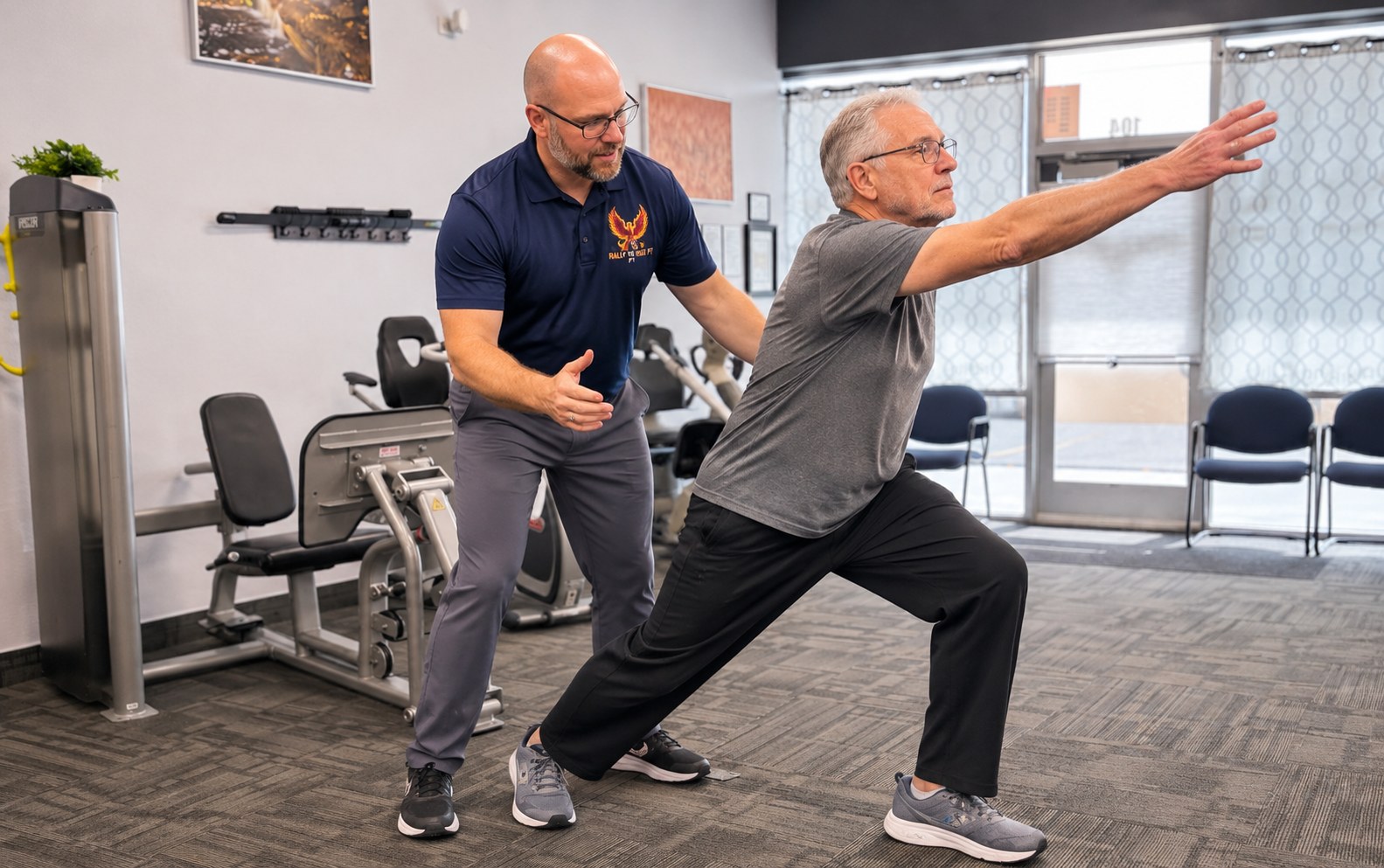
Physical therapist guiding an older adult through a large-amplitude stepping and reaching exercise to improve movement, balance, and coordination during Parkinson's rehabilitation at Rally to Rise Physical Therapy.

Parkinson's disease can affect the way the brain controls movement, often leading to muscle stiffness, slowed movements, reduced movement size, and changes in posture. Everyday activities such as getting dressed, reaching overhead, turning, or getting up from a chair may gradually become more difficult. Some individuals also experience reduced flexibility, muscle weakness, and difficulty initiating movements. Physical therapy can help address these changes through targeted strengthening, stretching, and movement training. Treatment may include exercises that encourage larger, more deliberate movements, improve flexibility, strengthen weakened muscle groups, and promote better posture and body mechanics. Practicing controlled movements with an emphasis on proper technique can help patients improve movement quality and make everyday activities easier to perform. The goal is to help individuals maintain mobility, improve physical function, and remain active for as long as possible. Exercise programs are tailored to each person's abilities and can be adjusted as symptoms and mobility needs change over time.
Balance, Walking, and Fall Prevention

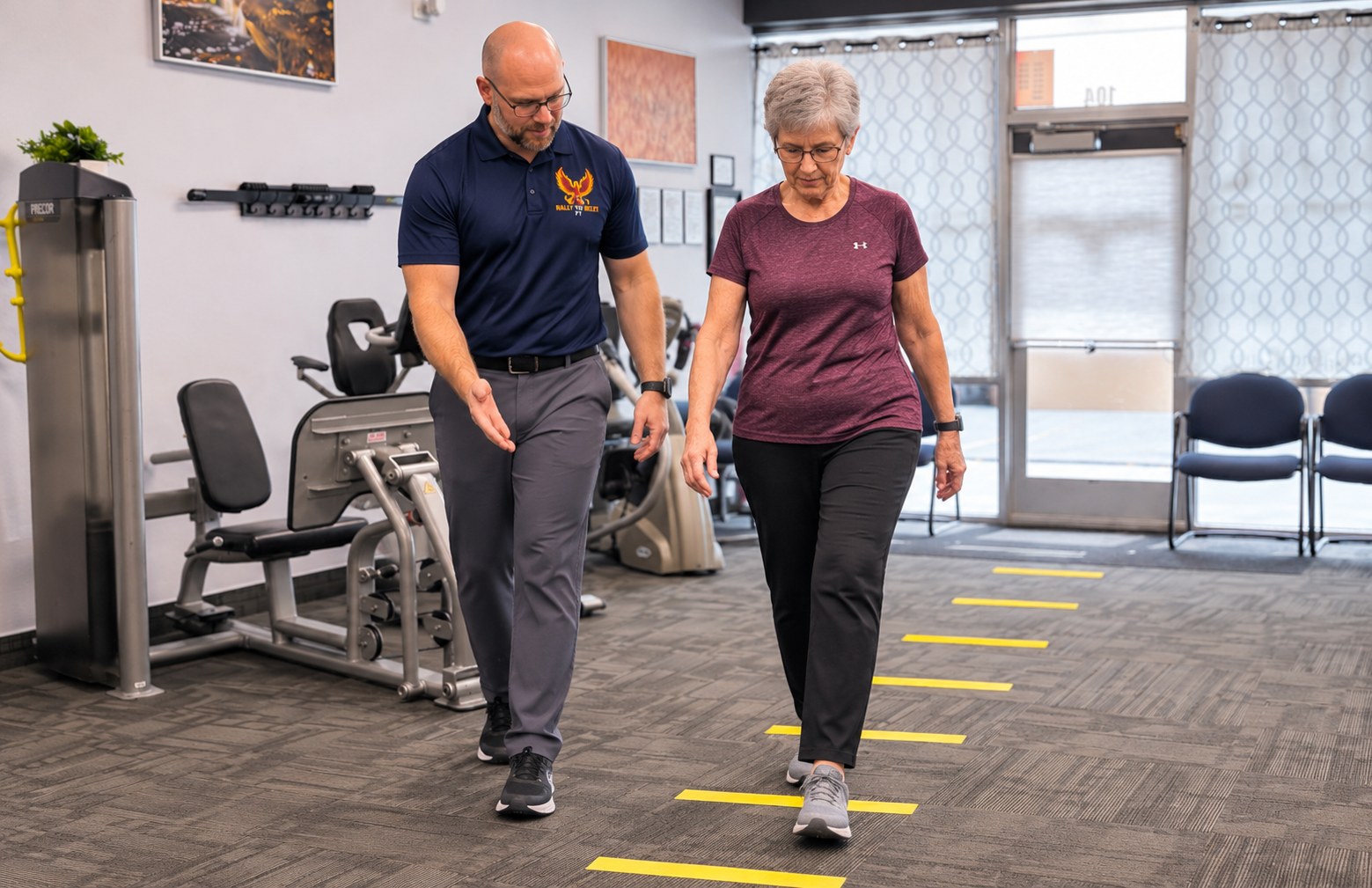
"Physical therapist guiding an older adult through gait training using floor markers to improve step length, walking coordination, and movement during Parkinson's rehabilitation at Rally to Rise Physical Therapy."

Parkinson's disease can affect balance and walking by changing the way the brain coordinates movement. Individuals may develop shorter steps, a shuffling walking pattern, reduced arm swing, or difficulty turning and changing directions. Some people also experience freezing of gait, where their feet temporarily feel stuck to the floor, making it difficult to initiate or continue walking. These changes can increase the risk of falls and make getting around more challenging. Physical therapy can help improve walking and balance through targeted exercises and gait training. Treatment may include practicing larger steps, improving walking speed and rhythm, working on turning and changing directions, and using visual or auditory cues to help initiate and maintain movement. Balance exercises can also challenge postural control and improve the ability to safely respond to changes in position or direction. The goal is to help patients move more safely and confidently while maintaining as much independence as possible. Exercises and walking strategies are tailored to each person's abilities and can be adjusted as symptoms change over time.
Maintaining Independence and Quality of Life

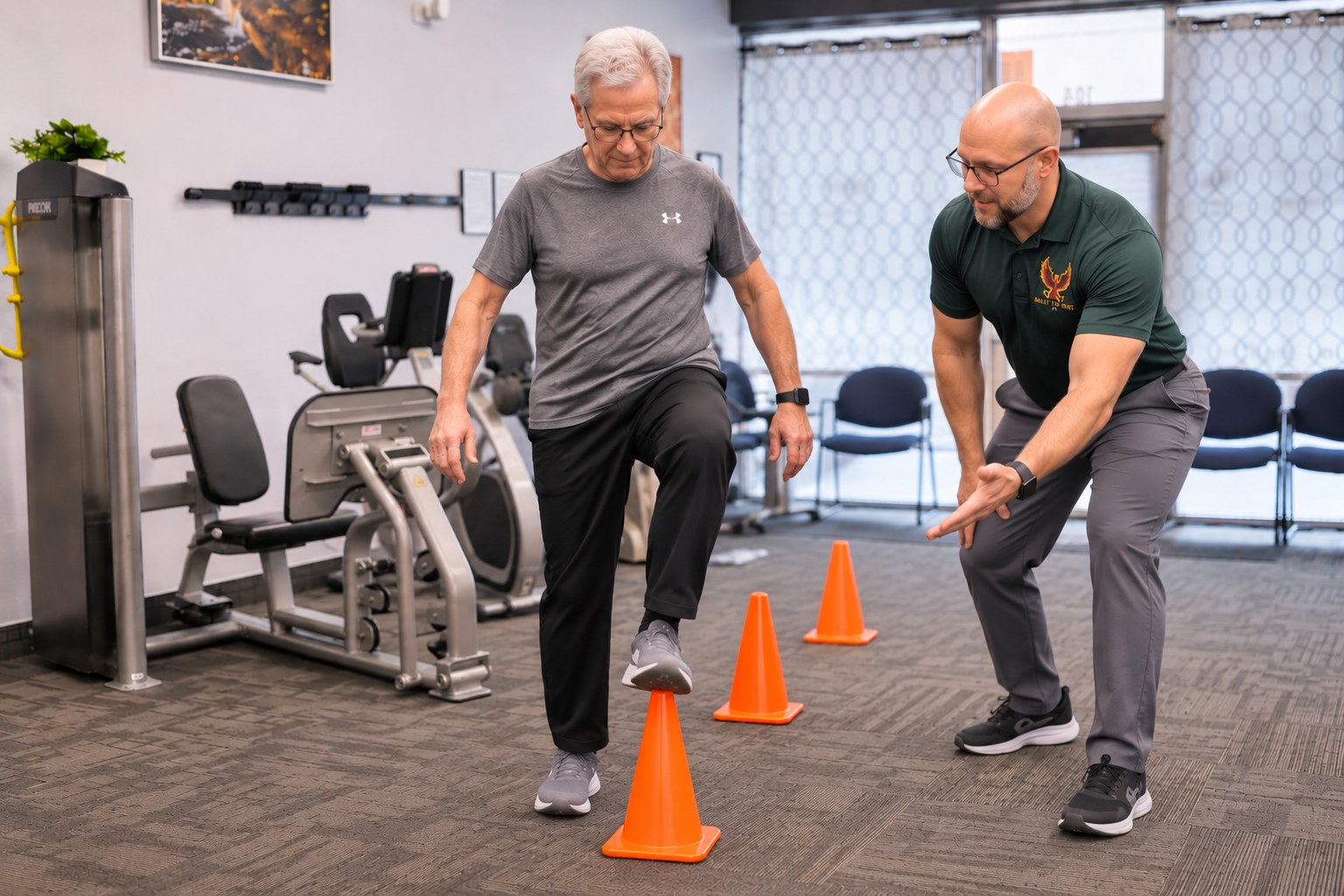
Physical therapist guiding an older adult through a cone-stepping exercise to improve walking ability, coordination, and mobility during Parkinson's rehabilitation at Rally to Rise Physical Therapy.

Parkinson's disease is a progressive condition, meaning physical symptoms and mobility challenges can change over time. Difficulties with walking, balance, coordination, and everyday movements may gradually affect a person's ability to remain active and independent. Staying physically active and maintaining a consistent exercise routine can play an important role in managing these challenges and preserving functional abilities. Physical therapy can help individuals develop an exercise program that supports long-term mobility, strength, balance, and endurance. Treatment may include functional movement training, cardiovascular exercise, balance activities, walking practice, and strategies for managing movement difficulties during everyday tasks. Therapists can also provide guidance on adapting activities, using appropriate movement strategies, and modifying exercises as physical abilities and symptoms change. The goal is to help individuals maintain their independence, stay involved in the activities they enjoy, and manage the physical challenges of Parkinson's disease as effectively as possible. Regular physical activity and ongoing rehabilitation can be valuable parts of managing the condition at every stage.

Staying Active and Moving Forward with Parkinson's Disease

Living with Parkinson’s disease can bring ongoing changes to movement, balance, and everyday activities. While there is currently no cure for Parkinson’s disease, physical therapy and regular exercise can play an important role in managing physical symptoms and maintaining mobility. Addressing movement difficulties early and staying active throughout the progression of the condition can help individuals preserve functional abilities, improve confidence with movement, and work toward maintaining their independence.

At Rally to Rise Physical Therapy, we take an individualized approach to Parkinson’s rehabilitation based on each person’s symptoms, abilities, and goals. Treatment may include therapeutic exercise, strengthening, stretching, balance training, gait training, large-amplitude movement exercises, and appropriate manual therapy when indicated. We also incorporate strategies to address difficulties with walking, turning, movement initiation, and other everyday activities. As symptoms and abilities change, we adjust treatment to help patients continue working toward meaningful improvements in physical function.

Whether you have recently been diagnosed with Parkinson’s disease or have been managing symptoms for many years, physical therapy can be a valuable part of your ongoing care. If you are looking for Parkinson’s disease physical therapy in Idaho Falls, Ammon, or the surrounding Eastern Idaho communities, Rally to Rise Physical Therapy is here to help. Contact our clinic to discuss your goals and learn how individualized rehabilitation can help you stay active, maintain mobility, and continue doing the things that matter most to you.